
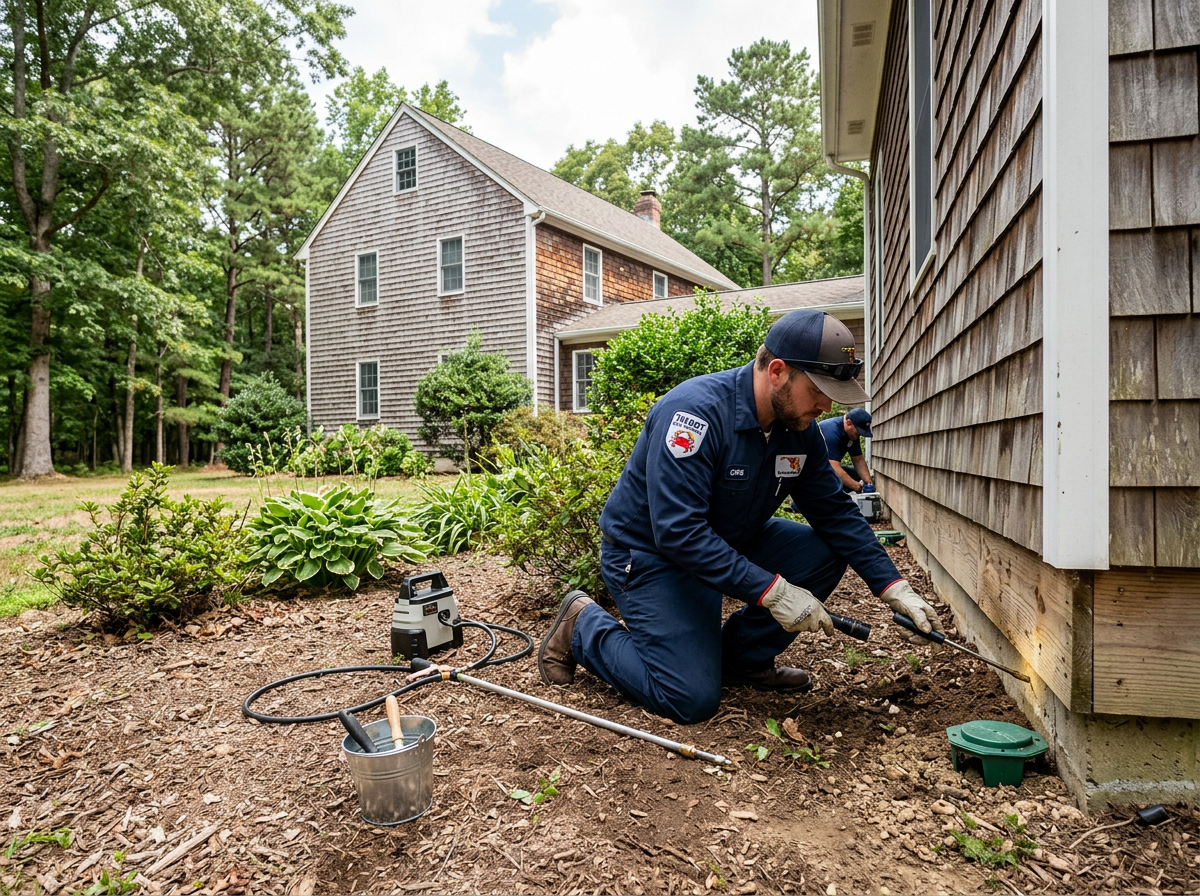
Upper Fairmount sits in Somerset County on the lower Eastern Shore where older frame houses rest on piers above shallow crawl spaces and a high water table. This setup keeps wood in constant contact with moist soil, creating the strongest termite pressure found anywhere in Maryland.
Technicians travel from the Easton office at 110 N Washington St #2b down MD-413 to reach properties here. Hot humid summers and mild winters keep subterranean termites active for most of the year, so inspections focus on pier supports, sill plates, and any wood touching soil.
We also serve nearby Princess Anne and other Somerset County communities with the same crawl-space and pier construction challenges.
Termite Treatment Services in Upper Fairmount, MD
Termite Treatment in Upper Fairmount
Targeted liquid barrier and baiting treatments for eastern subterranean termite colonies common to Maryland structures.…
Details →Eastern Subterranean Termite Control in Upper Fairmount
Targeted control for eastern subterranean termite colonies common to Maryland's Eastern Shore, addressing foraging patte…
Details →Termite Baiting Systems in Upper Fairmount
Termite baiting systems provide ongoing colony control for Eastern Shore homes without the soil disruption of a liquid b…
Details →Termite Inspection in Upper Fairmount
Detailed termite inspection that examines crawl spaces, basements, and exterior foundations for eastern subterranean ter…
Details →WDI Reports for Home Sales in Upper Fairmount
WDI reports prepared for real estate closings in Maryland identify active termite evidence and moisture issues common to…
Details →Termite Damage Repair in Upper Fairmount
Repairing wood damaged by eastern subterranean termites in Maryland homes where high water tables and pier construction …
Details →Around Upper Fairmount
We regularly work near:
- 📍MD-413 corridor through Upper Fairmount
- 📍rural residential piers and crawl spaces
- 📍local working waterfront edges
- 📍Somerset County farm edges bordering homes
Termite Treatment in Upper Fairmount — Local Notes
- •High water table forces many homes onto piers rather than slabs, leaving untreated sills exposed to termite entry.
- •Older frame construction and permanent wood-to-soil contact along MD-413 create ideal conditions for colonies to establish quickly.
- •Mild winters allow year-round foraging, so treatments must address both active mud tubes and hidden colonies in crawl spaces.
- •Rural access often means narrow driveways and working around farm equipment when reaching rear additions and outbuildings.