
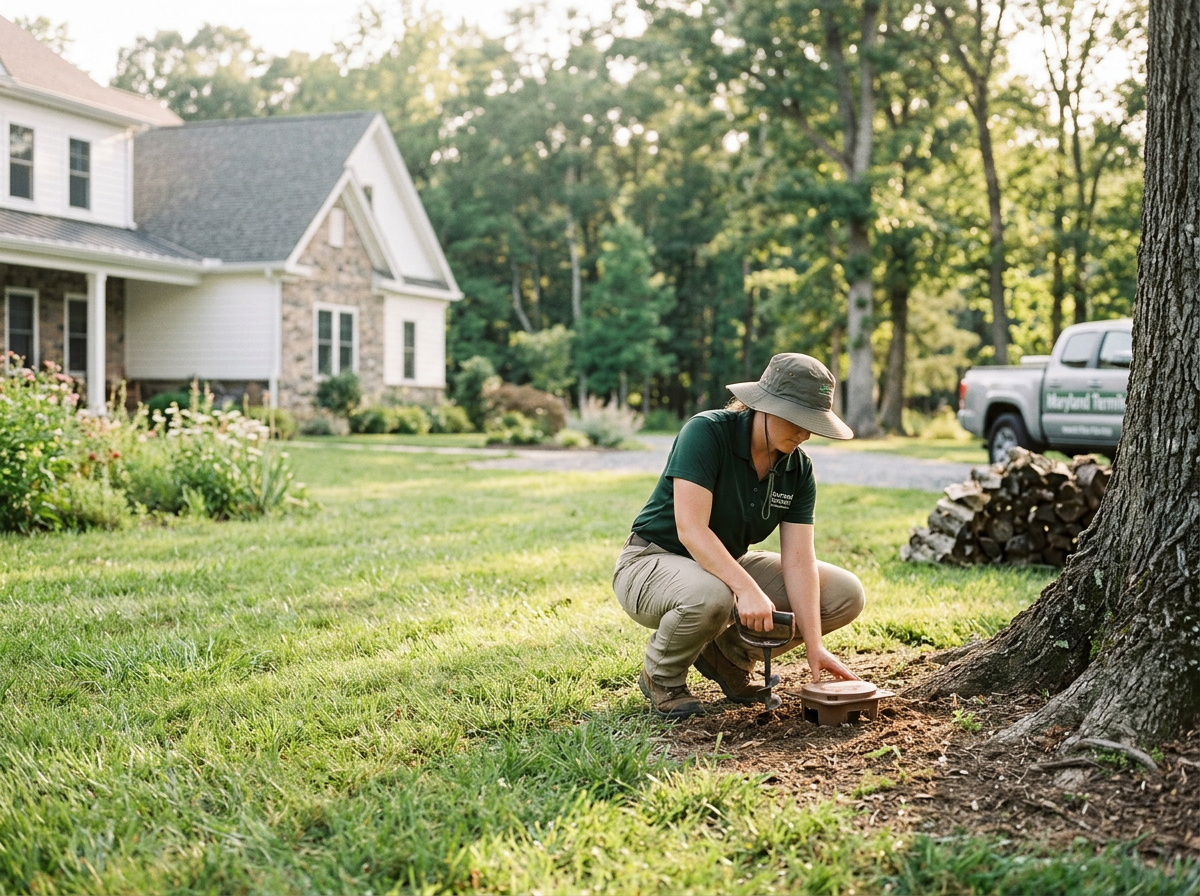
Newark is a rural village in Worcester County within the Pocomoke River watershed along MD-12. Its humid subtropical climate features hot summers that increase termite activity around older frame houses built with permanent wood-to-soil contact.
Technicians based at 110 N Washington St #2b in Easton travel connecting Eastern Shore routes to reach Newark, Snow Hill and Pocomoke City for termite control and pest control services.
Treatment plans address the shallow crawl spaces and high water table that define this Lower Eastern Shore watermen's town setting.
Termite Treatment Services in Newark, MD
Termite Treatment in Newark
Targeted liquid barrier and baiting treatments for eastern subterranean termite colonies common to Maryland structures.…
Details →Eastern Subterranean Termite Control in Newark
Targeted control for eastern subterranean termite colonies common to Maryland's Eastern Shore, addressing foraging patte…
Details →Termite Baiting Systems in Newark
Termite baiting systems provide ongoing colony control for Eastern Shore homes without the soil disruption of a liquid b…
Details →Termite Inspection in Newark
Detailed termite inspection that examines crawl spaces, basements, and exterior foundations for eastern subterranean ter…
Details →WDI Reports for Home Sales in Newark
WDI reports prepared for real estate closings in Maryland identify active termite evidence and moisture issues common to…
Details →Termite Damage Repair in Newark
Repairing wood damaged by eastern subterranean termites in Maryland homes where high water tables and pier construction …
Details →Around Newark
We regularly work near:
- 📍MD-12
- 📍Pocomoke River watershed
- 📍Newark village center
- 📍Worcester County rural roads
Termite Treatment in Newark — Local Notes
- •High water table keeps soil moisture elevated year-round, drawing subterranean termites to untreated sills in shallow crawl spaces.
- •Older frame construction common throughout the village creates repeated wood-to-soil contact points that require targeted treatment.
- •MD-12 serves as the primary access road, though narrow side roads limit staging space for equipment during visits.