
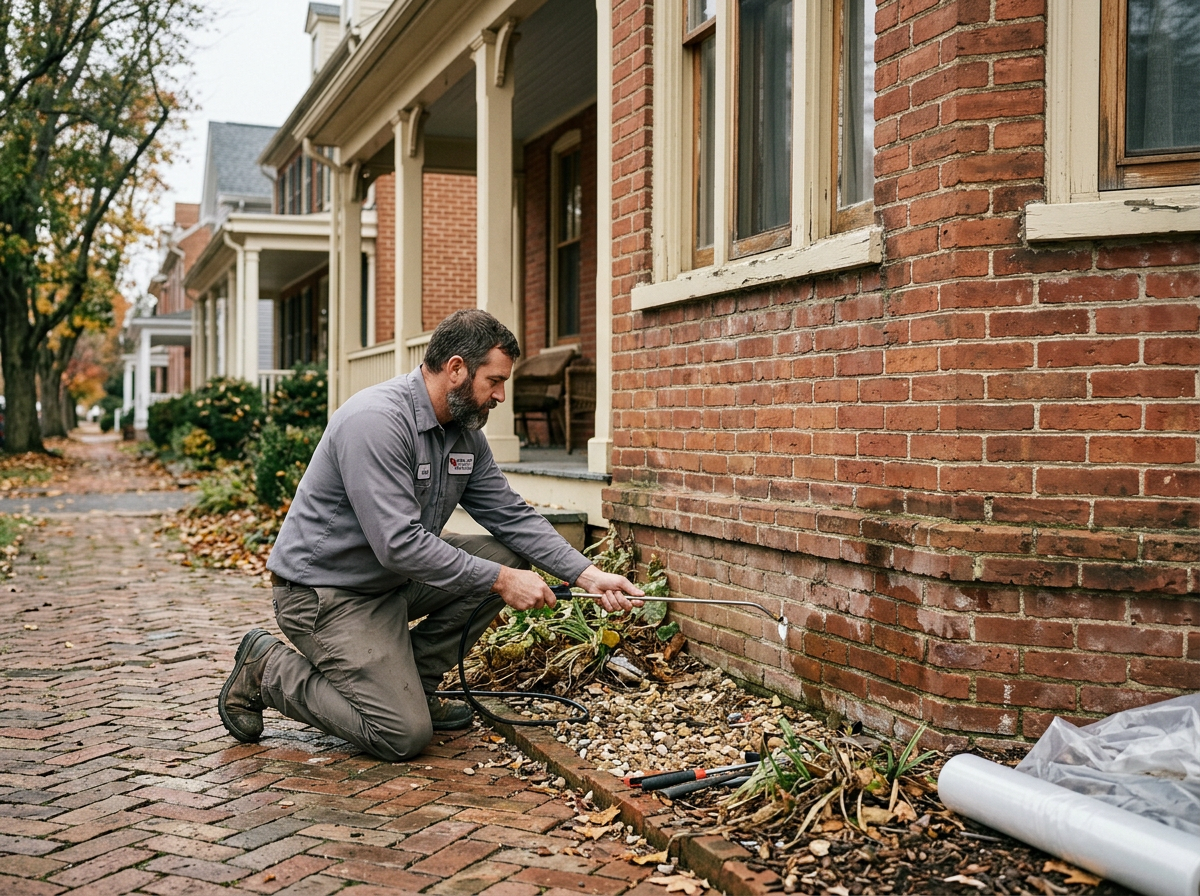
Port Deposit sits on the Susquehanna River in Cecil County with older farmhouses and additions added across different decades. These structures often have untreated sills and wood close to soil, creating steady termite pressure in the Upper Shore farm country setting.
Technicians travel from the Easton office at 110 N Washington St #2b to reach Port Deposit along MD-222. Service covers the river town and nearby communities including Perryville and Havre de Grace where mild winters and warm summers keep subterranean termites active year-round.
Termite control here focuses on the mix of grain-farm outbuildings and residential additions that sit near the water table. Local crews inspect crawl spaces and foundation perimeters common to the historic district before any treatment begins.
Termite Treatment Services in Port Deposit, MD
Termite Treatment in Port Deposit
Targeted liquid barrier and baiting treatments for eastern subterranean termite colonies common to Maryland structures.…
Details →Eastern Subterranean Termite Control in Port Deposit
Targeted control for eastern subterranean termite colonies common to Maryland's Eastern Shore, addressing foraging patte…
Details →Termite Baiting Systems in Port Deposit
Termite baiting systems provide ongoing colony control for Eastern Shore homes without the soil disruption of a liquid b…
Details →Termite Inspection in Port Deposit
Detailed termite inspection that examines crawl spaces, basements, and exterior foundations for eastern subterranean ter…
Details →WDI Reports for Home Sales in Port Deposit
WDI reports prepared for real estate closings in Maryland identify active termite evidence and moisture issues common to…
Details →Termite Damage Repair in Port Deposit
Repairing wood damaged by eastern subterranean termites in Maryland homes where high water tables and pier construction …
Details →Around Port Deposit
We regularly work near:
- 📍Port Deposit Historic District
- 📍Susquehanna River waterfront
- 📍MD-222 corridor
Termite Treatment in Port Deposit — Local Notes
- •Older farmhouses and multi-era additions often have untreated sills that allow termite entry along the Susquehanna.
- •Mild winters near the river keep colonies active longer than inland parts of the state.
- •Access to many properties runs along MD-222 with limited side streets in the historic core.
- •Grain-farm outbuildings and barns nearby share the same soil and moisture conditions as town homes.