
2026-09-15 ·
Bait System Placement Considerations For Rural Talbot County Yards
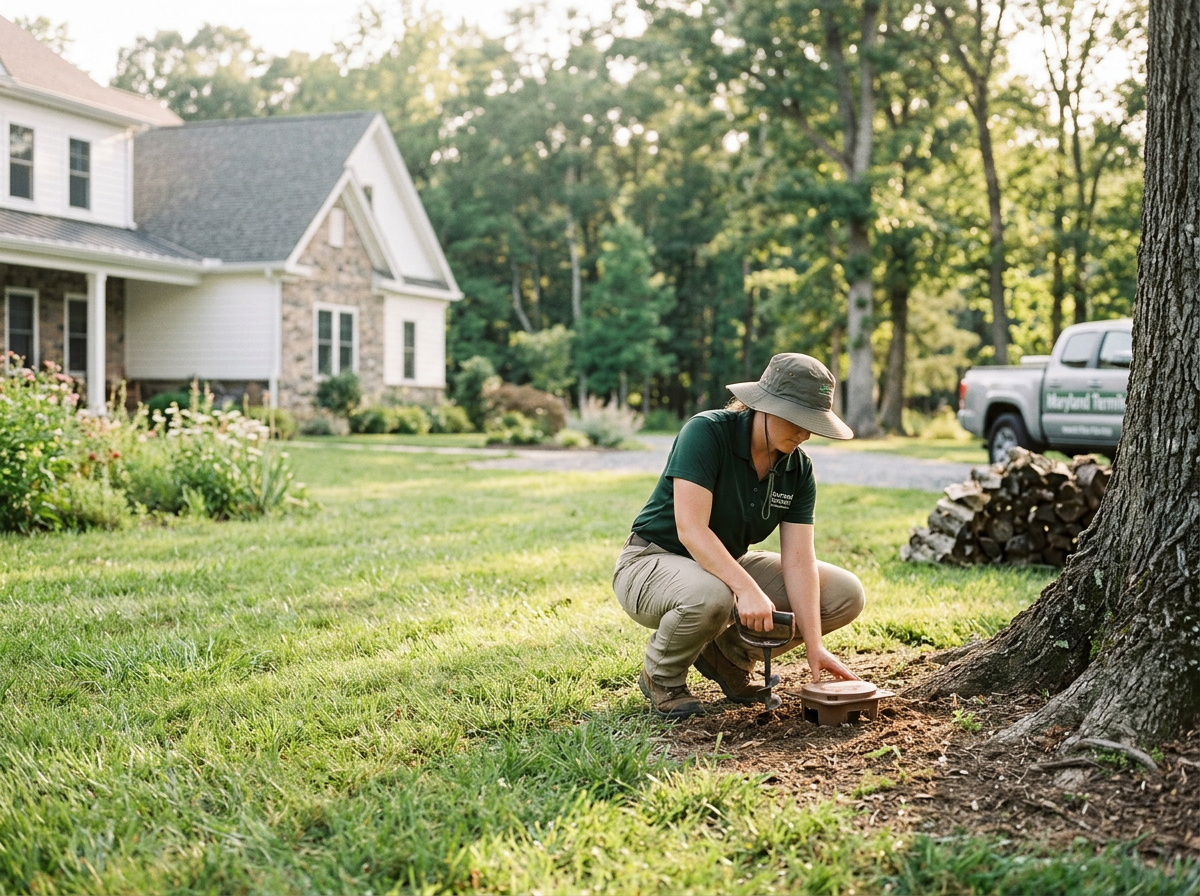
Bait system placement in rural Talbot County yards starts with stations set every 10 to 20 feet along the foundation perimeter while maintaining at least 6 inches of clearance from mulch beds and siding. This spacing aligns with typical foraging distances of 200 feet or more for eastern subterranean termites active on the Eastern Shore. Rural lots often include detached structures, fence lines, and utility trenches that extend the treated zone beyond the main house footprint.
Soil Conditions and High Water Table Effects
Rural Talbot County properties frequently sit over a high water table that influences how liquid soil barriers and bait stations perform. Stations must be installed in soil that stays moist but not saturated, so technicians probe for seasonal water levels before placement. In areas with frequent saturation near creeks or drainage ditches, stations shift to higher ground or are angled to avoid flooding that can wash away active ingredients. Piers and crawl spaces common on older Eastern Shore homes create additional entry points where stations are clustered at 8 to 12 foot intervals rather than the standard perimeter spacing. Mud tubes found along pier bases signal active foraging routes that guide exact station locations. These adjustments prevent wasted placements and keep the system functional through Chesapeake humidity cycles.
Layout Around Foundations and Outbuildings
Foundations in rural Talbot County often combine brick piers, crawl spaces, and slab additions that require separate station rings. Stations are placed on both the interior and exterior sides of crawl space access points when clearance allows. Outbuildings such as barns or workshops receive their own perimeter lines because termites can travel from these structures to the main residence. Railroad ties used as retaining walls or landscaping borders are treated as potential bridges, so stations sit 12 to 18 inches away from the ties rather than directly against them. This layout accounts for the longer foraging trails that develop across larger rural parcels where open fields and wooded edges meet the yard.
Vegetation and Mulch Management
Mulch beds placed against foundations create ideal moisture conditions for termite activity, so bait stations are positioned at least 6 inches away from the mulch edge. In rural yards where wood chips or leaf litter accumulate naturally, stations are sited in mineral soil rather than organic layers. Trees and shrubs near the house are inspected for root proximity because roots can carry termites closer to living areas. Spring swarmers indoors usually appear between March and June, prompting an initial station placement round before that window to intercept new colonies. Annual monitoring visits then adjust station locations if new mud tubes appear in previously untreated zones.
Integration With Inspections and Ongoing Monitoring
A thorough termite inspection identifies existing mud tubes and damaged wood before any stations are installed, ensuring placements target active routes. Properties listed for sale often require WDI reports that document these findings and the subsequent bait system layout. Rural Talbot County yards benefit from seasonal checks that coincide with known swarming patterns on the Eastern Shore. Technicians record station condition and termite activity at each visit so the grid can be expanded or relocated as needed. This approach keeps the system matched to changing soil moisture and vegetation conditions across larger lots.