
2026-09-15 ·
Annual Termite Monitoring Schedule For Waterfront Properties
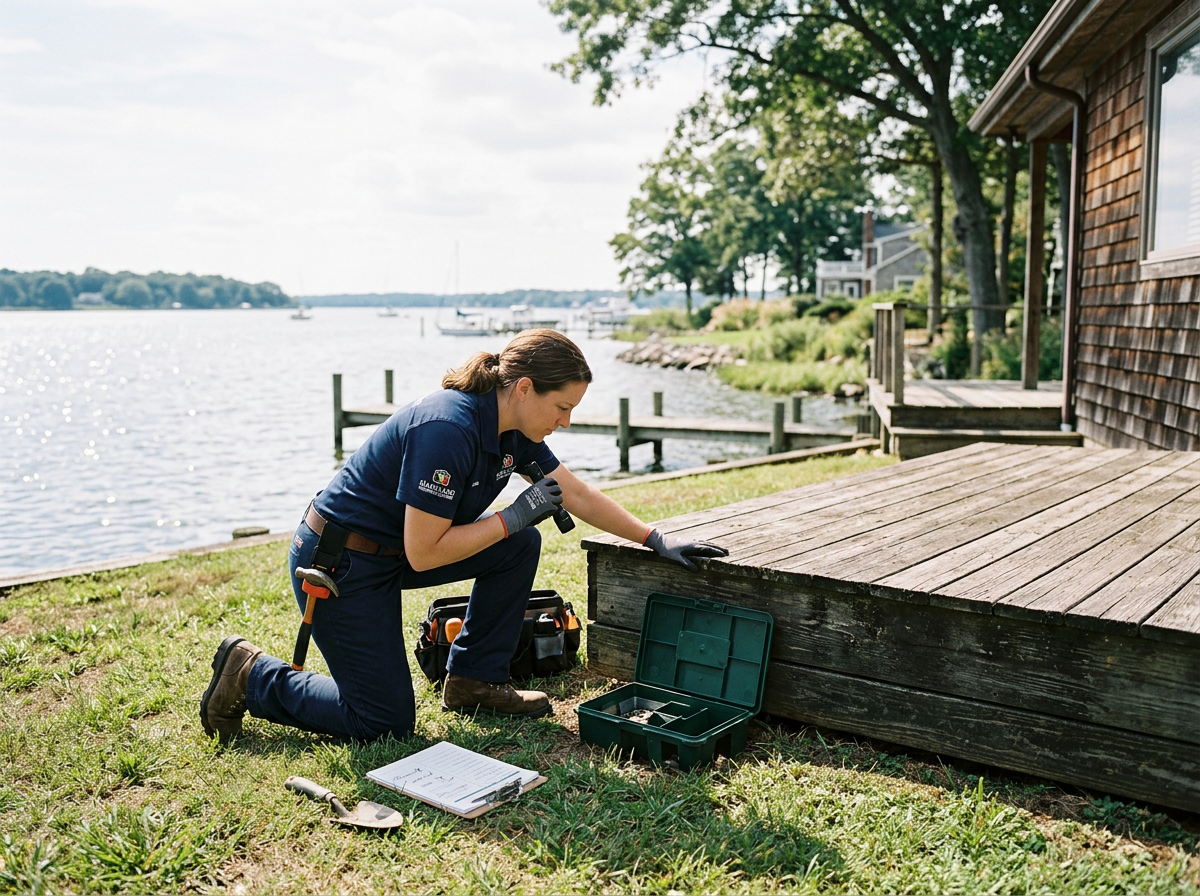
For waterfront properties across Maryland's Eastern Shore, an effective annual termite monitoring schedule centers on four targeted visits each year, timed to spring swarm activity from March through May and adjusted for crawl spaces over high water tables. Begin inspections in early spring before swarmers appear indoors, then follow with checks after heavy rains and mulch applications. Liquid soil barriers and baiting systems form the core tools, with stations placed along foundations and piers where termites forage up to several hundred feet. Property owners in areas like Easton can schedule these visits through local services that understand pier-and-beam construction common near the Chesapeake.
Spring Swarm Season Inspections
Spring marks the peak period when reproductive termites emerge indoors near windowsills and baseboards. Schedule the first visit between March and May to look for mud tubes along piers, sill plates, and foundation walls where moisture stays trapped. In waterfront settings, high water tables push termites toward drier zones under structures, so focus on crawl space access points and any areas where railroad ties or thick mulch beds sit against siding. Maintain at least 6 inches of clearance between mulch and wood to reduce attractants. Technicians check for active galleries by probing soil near bait stations spaced 10 to 20 feet apart. Early detection allows adjustments to existing liquid barriers before foraging colonies expand. Properties near Tilghman or Trappe benefit from this timing because seasonal flooding can shift soil moisture patterns quickly.
Summer Soil Barrier and Bait Reviews
Summer visits concentrate on verifying liquid termiticide performance around foundations after irrigation and storms. Technicians re-trench soil to a depth of 6 inches along the perimeter where barriers were applied and confirm no gaps exist near piers exposed to tidal influence. Bait stations receive fresh monitoring cards to track feeding activity, with replacements made only where stations show consistent hits. Mulch beds refreshed in late spring often require re-evaluation because added organic material can bridge treated zones. In neighborhoods like Cordova or Queenstown, humidity accelerates wood decay that termites exploit, so inspectors note any new shelter tubes forming on pier posts. This mid-year review keeps both barrier and bait components aligned with actual site conditions rather than relying on a single annual application.
Fall Assessment Before Winter
Fall inspections focus on documenting changes before colder months reduce termite activity. Crews examine WDI reports prepared for upcoming home sales and cross-check findings against prior spring and summer notes. Any new mud tubes discovered along waterfront retaining walls or under decks receive immediate attention through targeted bait placement. Foraging distance records help predict which neighboring structures might share colonies, especially on lots where crawl spaces connect via shared piers. Owners in Deal Island or Bivalve often see increased activity after autumn rains saturate the high water table, so stations near these zones get extra scrutiny. Records from these visits support consistent year-over-year comparisons without assuming coverage details.
Record Keeping and Next-Year Planning
Maintaining simple written logs of each visit date, station locations, and observed activity helps owners track trends across multiple seasons. Note any mulch additions, pier repairs, or drainage changes that could alter termite access routes. Properties in Easton and surrounding waterfront communities can reference these logs when coordinating with services such as termite inspection or termite baiting systems. Linking findings to local soil conditions supports better timing decisions the following spring. Consistent monitoring reduces surprise encounters with swarmers and keeps treatment zones effective despite the unique moisture challenges of Eastern Shore locations.